Can You Refinance a Home Using Bank Statements?
Yes, you can refinance your home using bank statements instead of tax returns. This is one of the most effective options for self-employed borrowers who show low income on paper but have strong monthly deposits.
How It Works
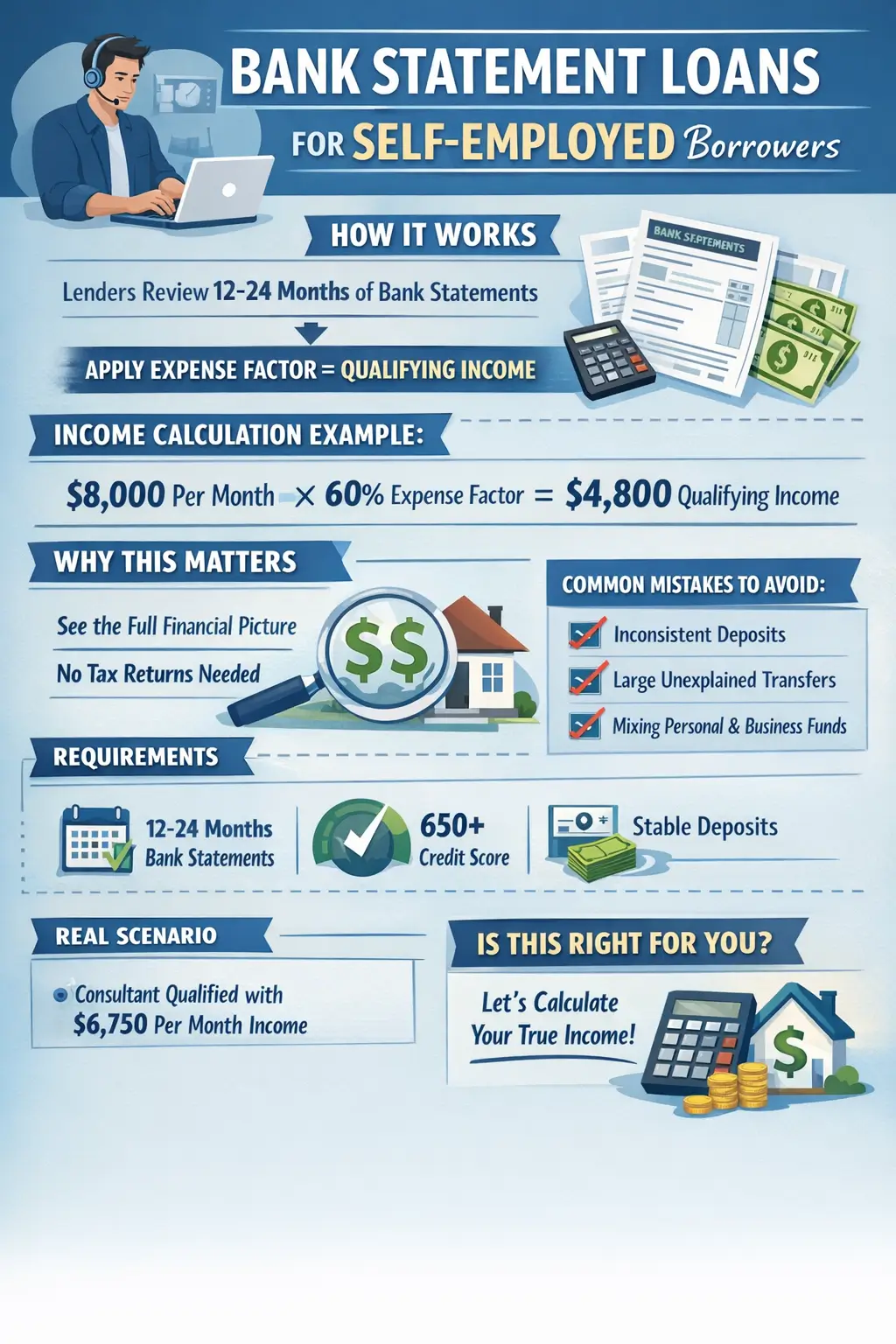
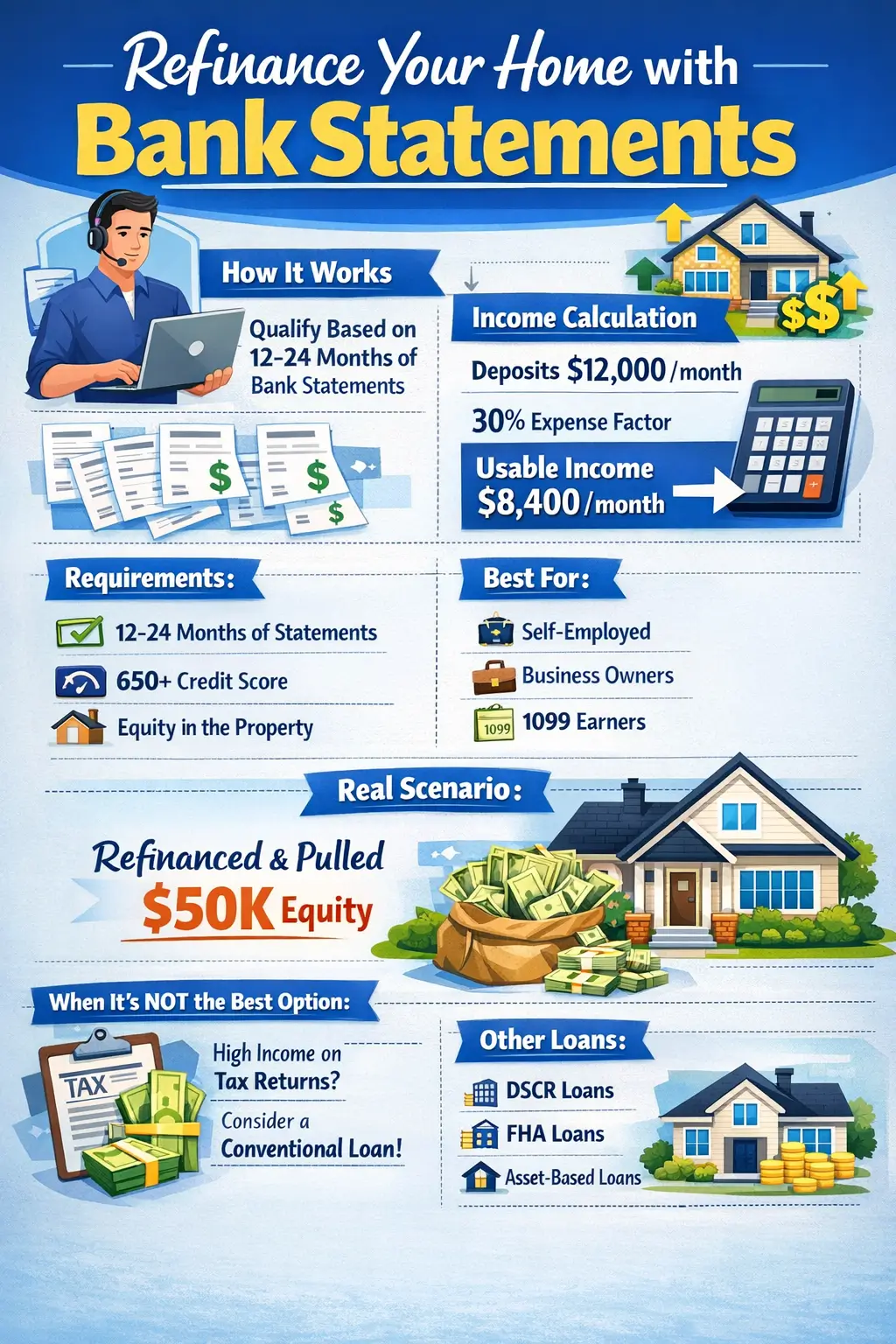
A bank statement refinance allows lenders to calculate your income based on deposits over 12 to 24 months instead of taxable income. This gives a more accurate picture of your real cash flow.
How Income Is Calculated
Lenders apply an expense factor between 10 percent and 50 percent depending on your business type.
Example
If you deposit 10000 per month and the lender uses a 30 percent expense factor, your usable income would be:
10000 x 70 percent = 7000 per month qualifying income
Requirements
- 12 to 24 months of bank statements
- Consistent deposits
- Typically 650 or higher credit score
- Equity in the property
Real Scenario
A business owner depositing 12000 per month qualified using a 30 percent expense factor, giving them 8400 in usable income. This allowed them to refinance and pull equity out of their home.
Who This Is Best For
- Self-employed borrowers
- Business owners with write-offs
- 1099 earners
When This Is NOT the Best Option
If your tax returns show strong income, a conventional loan may give you a better rate and lower cost.
Other Loan Options
- DSCR loans for investors
- FHA loans with flexible guidelines
- Asset-based loans if you have strong reserves
If you want to see what your deposits qualify you for, let’s take a look and map out your best option.