Bank statement loans are designed specifically for self-employed borrowers who cannot qualify using traditional income documentation like W2s or tax returns.
If you are a business owner, freelancer, or 1099 earner, your real income often looks very different from what is reported to the IRS. This is where bank statement loans come in.
How It Works
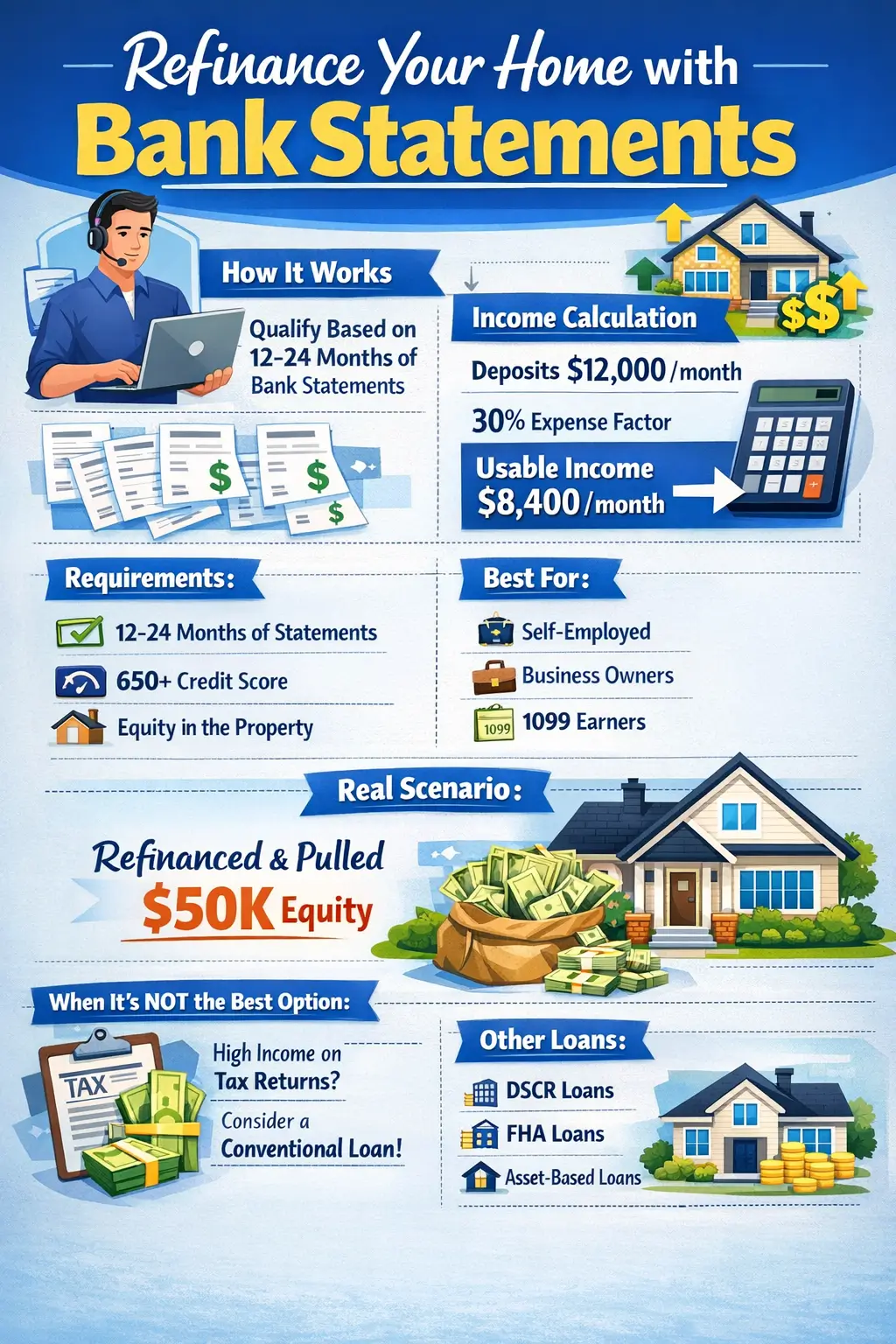
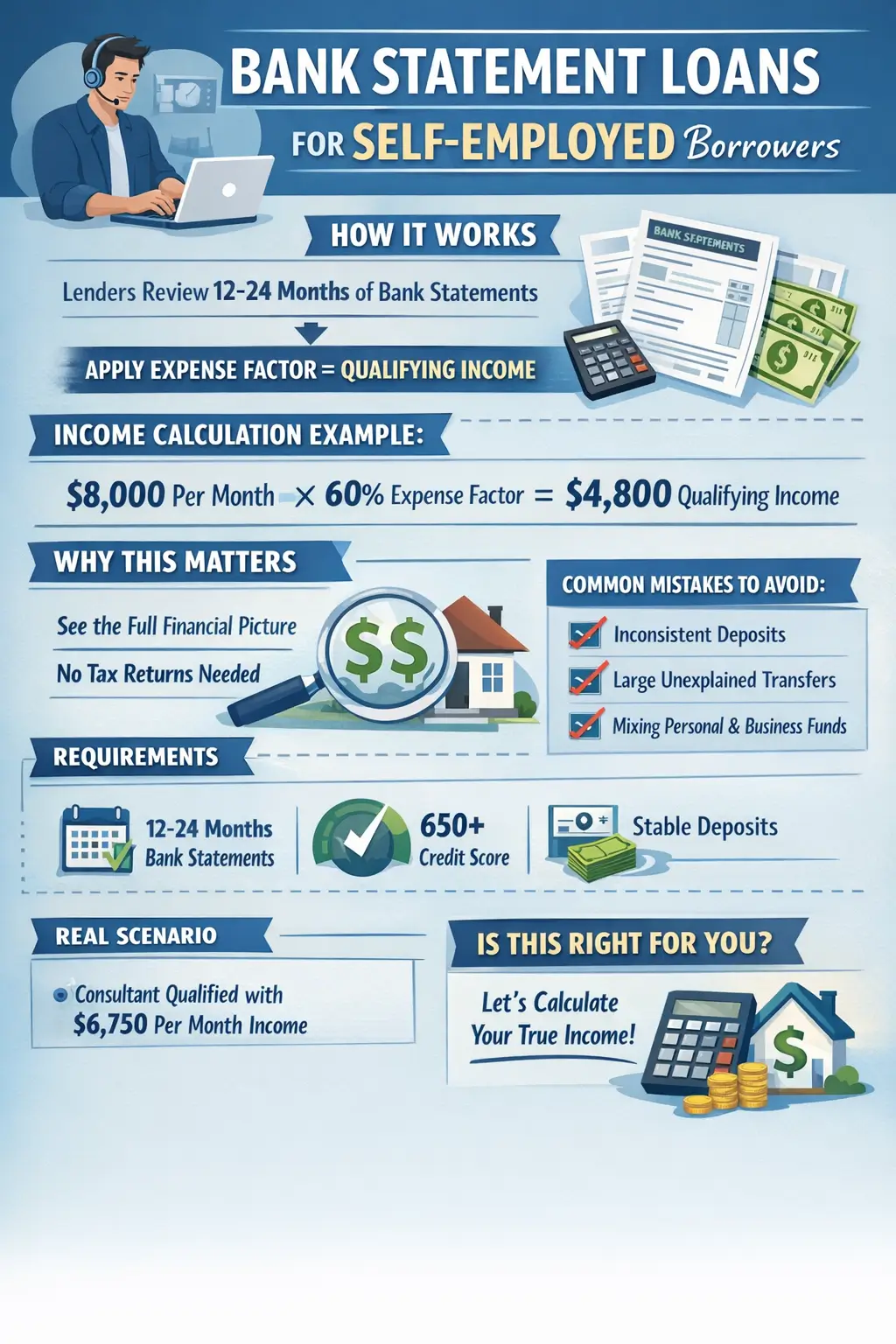
Instead of relying on tax returns, lenders review 12 to 24 months of bank statements and calculate your average monthly deposits.
From there, they apply an expense factor to estimate your true income.
How Income Is Calculated
If your deposits average 8000 per month and the lender uses a 40 percent expense factor:
8000 x 60 percent = 4800 monthly qualifying income
Why This Matters
Many self-employed borrowers are financially strong but get denied because of how their income is structured.
Bank statement loans allow lenders to see the full picture instead of just what’s on paper.
Requirements
- 12 to 24 months bank statements
- Stable deposit history
- Typically 650 or higher credit score
Real Scenario
A consultant earning 9000 per month was denied using tax returns. With a 25 percent expense factor, they qualified with 6750 monthly income and secured a loan.
Common Mistakes to Avoid
- Deposits that are inconsistent or declining
- Large unexplained transfers
- Not separating personal and business finances
When This Is NOT the Best Option
If your tax returns already show strong income, traditional loans may offer better terms.
Other Loan Options
- Conventional loans
- P and L loans
- DSCR loans for investors
Let’s calculate your real income based on your deposits and see what you qualify for.